Complete Guide to Periodic Car Service in Noida Extension
What a periodic car service includes, how a good service visit runs and how to prepare, written for car owners in Noida Extension and Greater Noida West.

A periodic car service is planned maintenance done at fixed intervals of time or distance. It replaces the parts and fluids that wear out on a schedule and inspects everything that could become a problem before the next visit. For owners in Noida Extension, where daily driving often mixes short society runs with longer trips into Noida or Ghaziabad, a regular service is the most cost-effective way to keep a car reliable. Think of this as a periodic car service guide you can keep for reference.
This guide explains what the service covers, how a well-run visit works and how to get the most from it. If you are wondering how often to book, our separate article on service intervals in Indian driving conditions covers that question in detail.
What a Periodic Service Actually Includes
Manufacturers publish a schedule that lists what should be done at each interval. The exact items vary by model, but most periodic services include the following groups.
Engine Oil and Filters
Engine oil lubricates, cools and cleans the engine's moving parts. Over time it breaks down and collects contaminants, so it is replaced along with the oil filter at the specified grade. The air filter is checked and cleaned or replaced, and the cabin filter, which cleans the air you breathe inside the car, is inspected as well.
Brakes
Brake pads, discs, drums and shoes are measured for wear. Brake fluid level and condition are checked, because brake fluid absorbs moisture over time and becomes less effective. The handbrake is adjusted if needed.
Fluids and Cooling
Coolant, power-steering fluid where fitted, clutch fluid and washer fluid are checked and topped up. The radiator, hoses and cooling fan are inspected for leaks, which matters in summer when the cooling system works hardest.
Battery and Electricals
The battery and charging system are tested, along with lights, horn, wipers and dashboard warning lamps. Where the car supports it, a diagnostic scanner reads stored fault codes.
Tyres, Steering and Suspension
Tread depth, sidewalls and pressures are checked, including the spare. Shock absorbers, bushes, ball joints and steering linkages are inspected. Uneven tyre wear can point to an alignment issue, which is a separate job covered on our wheel alignment and balancing page.
How a Well-Run Service Visit Works
A good service follows a predictable sequence:
- Booking. You share the car model, year, odometer reading and any concerns.
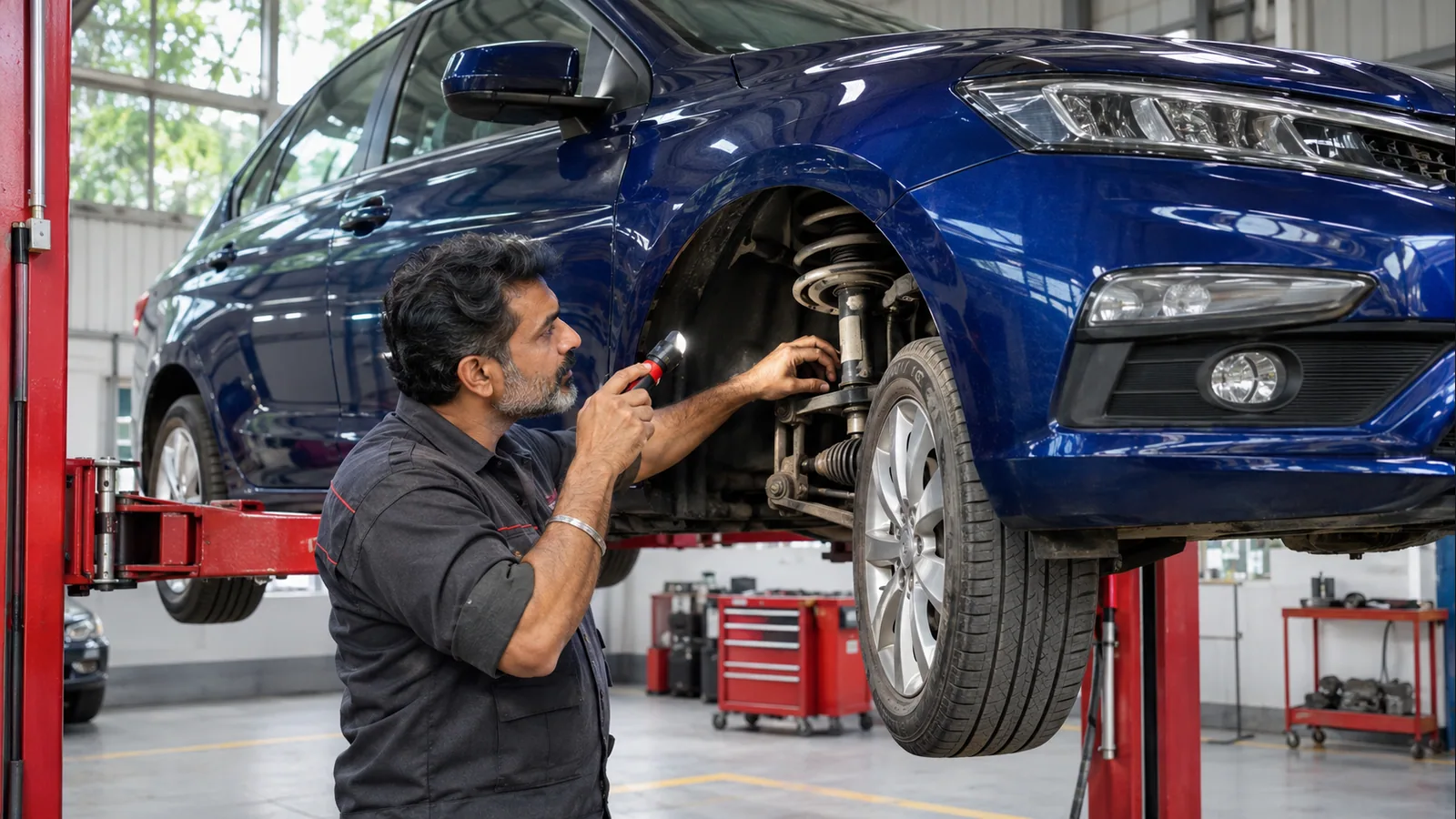
- Inspection. The car is checked, ideally on a lift, before anything is replaced.
- Explanation. You hear what is due, what is worn and what can wait.
- Approval. Work starts only once you agree to the scope and estimate.
- Servicing. Oil, filters and other agreed items are replaced to specification.
- Quality check and handover. A road test confirms brakes, steering and gear changes, and you receive a written summary.
The approval step is what separates a transparent service from an expensive one. Additional work should always be explained and agreed before it starts.
Preparing for Your Service
A few minutes of preparation makes the visit more useful:
- Note anything unusual: noises, vibrations, warning lights, a pull to one side or a smell.
- Check when the last service was done and at what odometer reading.
- Bring the service booklet or previous bills if you have them.
- Remove valuables and clear the boot if the spare wheel needs checking.
Clear information helps the technician focus the inspection on what matters for your car rather than running through a generic list.
Why Noida Extension Driving Makes Regular Service Important
Many cars in Noida Extension spend their days in stop-start traffic, short runs within large societies and occasional longer trips on the Link Road or NH-9. Short trips are hard on engine oil because the engine rarely reaches full operating temperature for long. Stop-start traffic wears brakes and clutches faster. Construction dust in a fast-growing area clogs air and cabin filters sooner.
None of this is unusual, but it means sticking to the schedule, or even servicing slightly earlier, pays off. The manufacturer's "severe conditions" schedule, if your manual has one, often describes exactly this kind of driving.
Common Mistakes to Avoid
- Skipping a service because the car "feels fine". Worn brake pads and old oil rarely announce themselves until they cause damage.
- Using the wrong oil grade. Always follow the grade and specification in the manual.
- Ignoring recommendations without noting them. If you postpone an item, write it down and revisit it at the next service.
- Losing records. A complete service history helps resale and future diagnosis.
How Periodic Service Connects to Other Maintenance
A periodic service is the backbone of car care, but it is not the only thing a car needs. Seasonal checks before summer and the monsoon, alignment after a hard pothole impact, and timely battery replacement all sit alongside it. Our guide to maintaining your car between scheduled services covers the simple checks you can do yourself.
Conclusion
A periodic car service keeps the predictable wear items in check and catches developing problems early. Choose a workshop that inspects first, explains what is due, asks before doing extra work and gives you a written record.
ROADSTERGURU carries out periodic car service for all makes at our Patwari workshop in Greater Noida West. Call or WhatsApp 9990700500 with your car details to plan a visit.
Frequently Asked Questions
It is scheduled maintenance carried out at set time or distance intervals, based on the manufacturer's schedule. It replaces wearing consumables and inspects the parts that tend to fail if ignored.
Yes. An oil and filter change is one part of it. A periodic service also checks brakes, fluids, filters, battery, tyres, suspension and electrical items.
A routine service usually fits within a working day. Extra work found during inspection can add time, which is why you should be told before any additional job starts.
Yes, if you have it. Previous records help the workshop see what was replaced last time and what is due now.
A multi-brand workshop can service most makes and models, following each manufacturer's specified oil grade, filters and intervals.