Simple Car Maintenance Tips Between Services
Easy car maintenance tips any owner can do between services, from tyre and fluid checks to lights, wipers, cleaning and early warning signs.
Between professional services, a few simple habits keep your car safer and catch problems early: check tyre pressures monthly, look at the oil, coolant, brake fluid and washer levels, make sure lights and wipers work, glance under the car for leaks and pay attention to new noises, smells or warning lights. These checks take minutes and need no special tools, but they make a real difference to reliability. The car maintenance tips between services below are simple enough for any owner.
1. Tyre Pressure and Condition
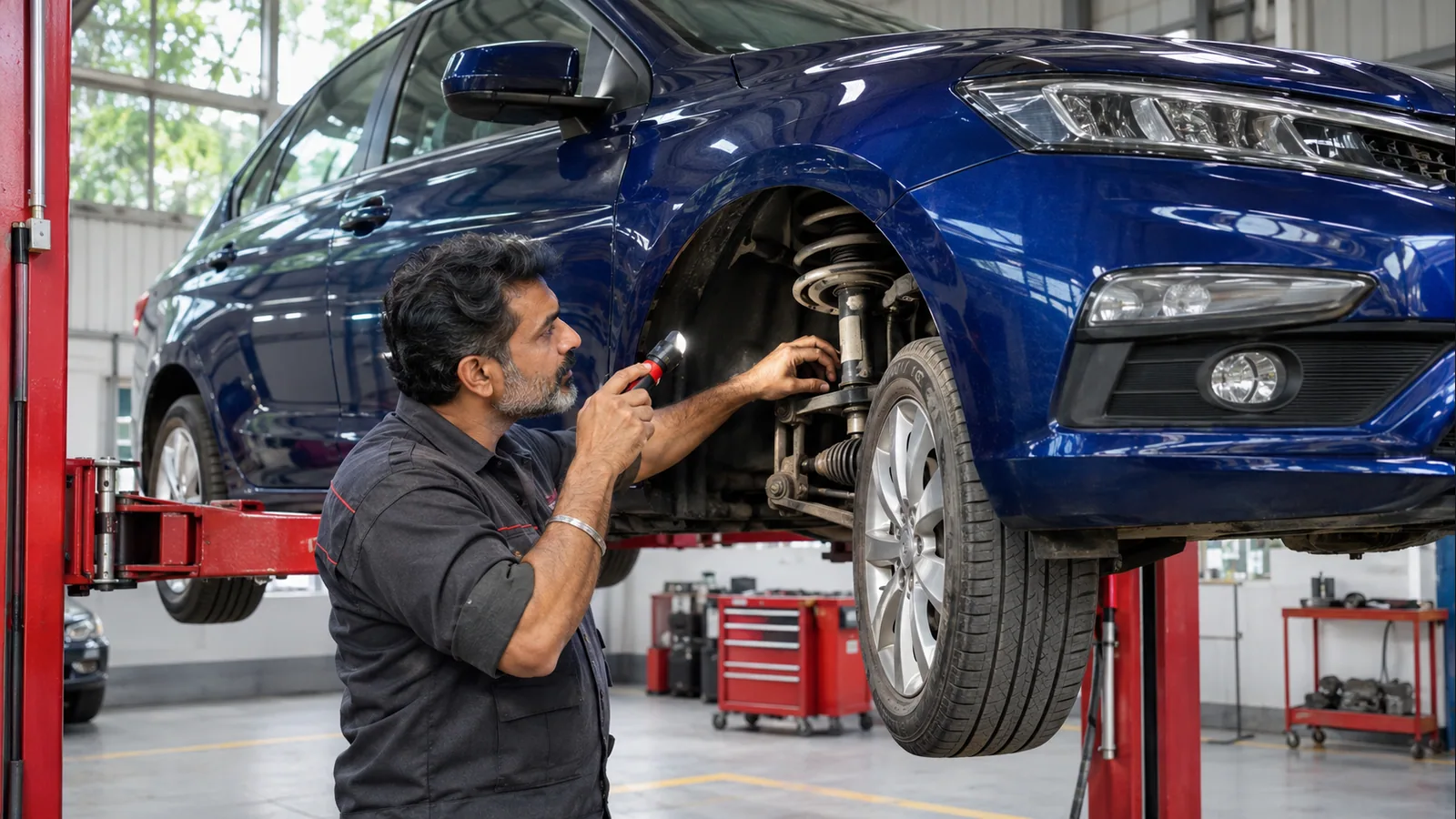
Tyres are the only part of the car touching the road. Check pressures monthly with a reliable gauge when the tyres are cold, using the figures on the door jamb label or in the manual. While you are there:
- look for cuts, bulges or embedded objects,
- check tread depth across the width,
- note any uneven wear, which may signal alignment issues.
Do not forget the spare.
2. Engine Oil
Park on level ground, wait a few minutes after switching off and check the dipstick. Top up with the specified oil if the level is low. A level that drops noticeably between services is worth mentioning. Our guide on how often to change engine oil explains intervals and grades.
3. Coolant
With the engine cold, check the coolant level in the expansion tank is between the marks. Never open the cap on a hot engine. A repeatedly falling level suggests a leak.
4. Brake Fluid
Check the reservoir level. Brake fluid levels drop slightly as pads wear, but a sudden drop can mean a leak. Get it inspected rather than simply topping it up.
5. Washer Fluid and Wipers
Keep the washer reservoir full, especially before the monsoon and dusty months. Replace wiper blades that streak or judder; always use washer fluid before wiping a dusty windscreen to avoid scratches.
6. Lights
Once a month, switch on all lights and walk around the car, or use a reflection in a glass door. Check headlights, tail lights, brake lights, indicators, reverse lights and number plate lights.
7. Look Under the Car
Your parking spot tells you a lot. Fresh spots of:
- dark brown or black fluid may be engine oil,
- green, pink or orange fluid may be coolant,
- clear water under the front, after AC use, is normal condensation,
- red fluid may be transmission or power steering fluid.
Anything other than AC condensation deserves a check.
8. Battery
Look at the terminals for white or green corrosion and make sure they are tight. A slow crank is an early warning. See car battery problems for other signs.
9. Listen, Feel and Smell
You know your car better than anyone. Pay attention to:
- new squeaks, knocks or grinding,
- vibration in the steering wheel or seat,
- the car pulling to one side,
- burning, sweet or fuel smells,
- warning lights on the dashboard.
Note when the symptom happens. That information is valuable when you book a check.
10. Keep It Clean, Inside and Out
Regular washing removes dust, bird droppings and residues that damage paint. Avoid dry wiping a dusty car. Inside, vacuuming and wiping surfaces keeps dust and odours down. A periodic professional car detailing session goes deeper, especially after the monsoon.
11. Drive Smoothly
Smooth acceleration, early braking and slowing down for speed breakers reduce wear on brakes, tyres, clutch and suspension, and improve fuel economy.
12. Keep a Simple Log
Record service dates, odometer readings, fuel fills and any symptoms. A note on your phone is enough. It helps you notice trends, such as falling fuel economy, and helps your workshop diagnose problems.
What Not to Do Yourself
Some jobs are best left to a workshop: brake work, anything involving the AC refrigerant, electrical faults, suspension and steering repairs, and anything that requires lifting the car. If in doubt, ask.
These Checks Support Regular Servicing
Your manufacturer's service schedule covers inspections and replacements that need tools and expertise. Keep up with your periodic car service, and use the checks above to catch issues in between. Our article on how often to service your car in India explains the schedule.
A Five-Minute Monthly Routine
If you prefer a fixed routine, do the following on the first weekend of every month: check all four tyre pressures and the spare, open the bonnet and look at the oil, coolant, brake fluid and washer levels, switch on the lights and walk around the car, and glance at the ground under your parking space. Write the date and odometer reading in your log. That is all. Done consistently, this routine catches most slow leaks, underinflated tyres and failed bulbs long before they cause trouble.
Conclusion
A few minutes a month spent on tyres, fluids, lights and attention to new symptoms keeps your car safer and makes each service more effective.
If your checks turn up something unusual, call ROADSTERGURU on 9990700500 or WhatsApp us. Our Patwari workshop in Greater Noida West serves Noida Extension and nearby areas.
Frequently Asked Questions
Tyre pressures and condition, engine oil, coolant, brake fluid and washer levels, lights, wipers and a look under the car for leaks.
At least once a month and before long trips, when the tyres are cold.
Topping up washer fluid and engine oil is straightforward. Use the correct specification. Never open the coolant cap on a hot engine. A falling brake fluid level should be inspected rather than simply topped up.
Yes. Notes on dates, odometer readings, fuel fills and any symptoms help your workshop diagnose problems.
No. They help you catch problems early, but a professional service covers inspections and replacements that need tools and expertise.