How Often Should You Change Engine Oil?
How often to change engine oil, why severe city driving conditions matter, how to choose the right grade and what an oil service in Greater Noida West includes.
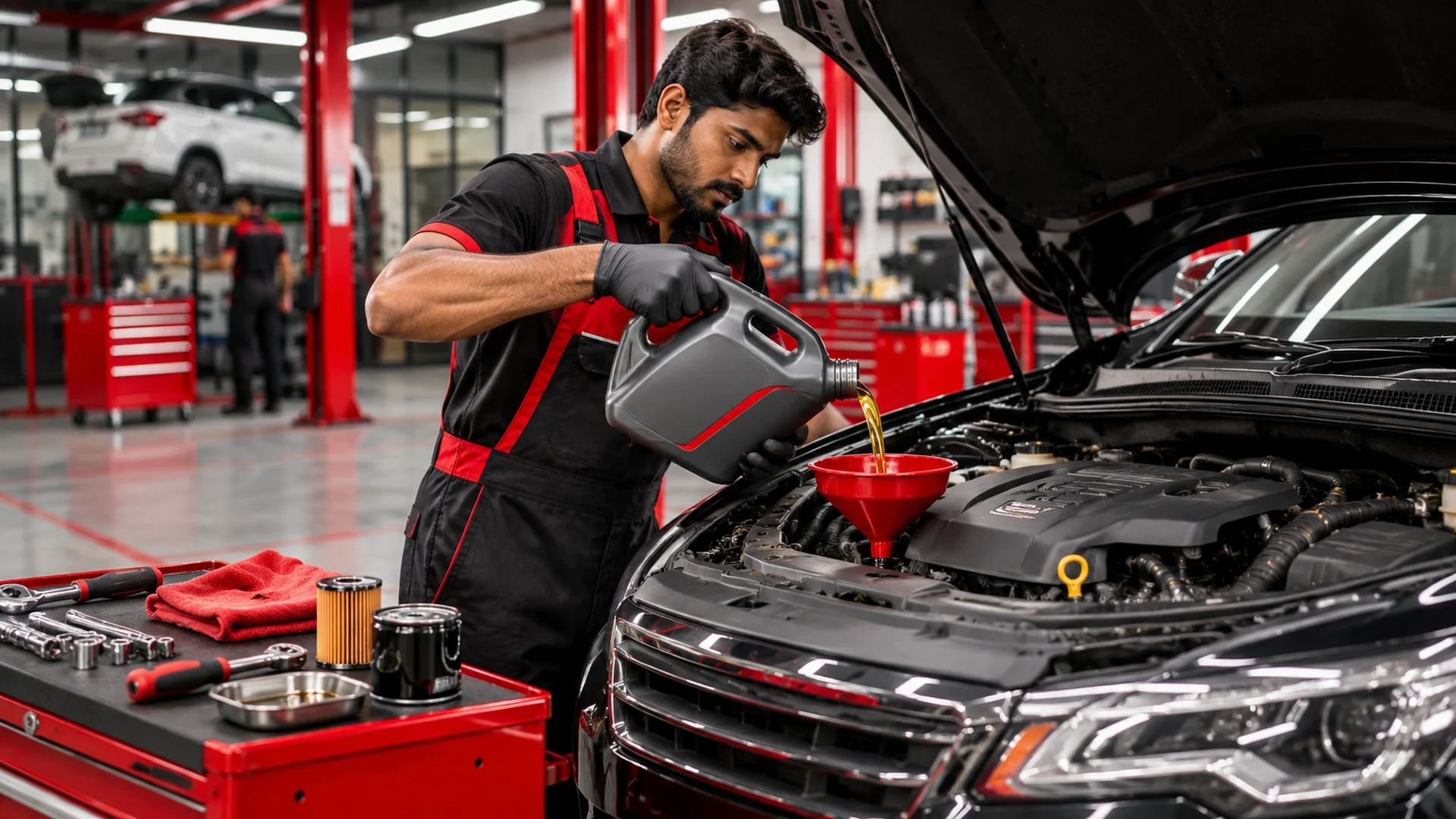
You should change engine oil at the interval in your owner's manual, by kilometres or by time, whichever comes first. If your driving fits the manufacturer's definition of severe conditions, such as short trips, heavy stop-start traffic and dusty roads, the shorter severe-service interval may apply. Many cars used mainly around Greater Noida West fall into that category, so it is worth checking which schedule your manual recommends.
What Engine Oil Does
Engine oil lubricates moving parts, carries heat away from hot areas, keeps the inside of the engine clean by holding dirt and combustion by-products in suspension, and helps seal the piston rings. Over time, heat breaks down the oil and additives get used up, while the oil collects fuel, moisture and soot. Old oil protects less well, even if it still looks acceptable.
Normal Versus Severe Service
Most manuals give two schedules. The normal schedule assumes regular journeys long enough for the engine to warm up fully. The severe schedule applies to conditions such as:
- many short trips where the engine does not reach full temperature,
- heavy stop-start traffic and long idling,
- dusty or unpaved roads,
- towing or carrying heavy loads.
A car that mostly does school runs, office commutes through congested chowks and society-to-market trips may well count as severe service. That does not mean you need to change oil constantly, but it does mean sticking to the right interval matters.
Kilometres or Months?
Oil ages with time as well as use. Moisture and fuel residue build up, especially if the engine rarely gets hot. That is why a car driven only a few thousand kilometres a year still needs an oil change at the time interval. For a full picture of service timing, see our guide on how often to service your car in India.
Choosing the Right Oil
Viscosity Grade
Grades such as 0W-20, 5W-30 or 15W-40 describe how the oil flows when cold (the number before the W) and at operating temperature (the number after). Your manual specifies which grades suit your engine.
Specification
Beyond viscosity, oils meet industry or manufacturer specifications. Diesel engines with particulate filters, turbocharged petrol engines and some newer designs require specific specifications. Using a correctly specified oil matters more than brand.
Mineral, Semi-Synthetic or Synthetic
Synthetic oils generally resist breakdown better at high temperatures. Your manual may require a particular type. If not, your technician can explain the trade-offs for your car and driving.
Signs Your Oil Needs Attention
- The oil change reminder or service indicator has come on.
- The oil level on the dipstick is low.
- The oil pressure warning light flickers or comes on; stop safely and switch off the engine, as this is serious.
- The oil is very dark and gritty, or milky in colour.
- Engine noise has increased, particularly on cold starts.
How to Check the Oil Yourself
Park on level ground, let the engine sit for a few minutes after switching off, pull the dipstick, wipe it, reinsert it fully, then pull it out again and read the level between the marks. Top up with the correct oil if needed, a little at a time. Checking every couple of weeks takes a minute and catches leaks or consumption early.
What a Proper Oil Service Includes
A careful oil change during a periodic car service includes:
- Draining the old oil while the engine is warm.
- Replacing the oil filter and the sump plug washer where required.
- Refilling with the correct grade and quantity.
- Checking for leaks and confirming the level after running the engine.
- Resetting the service reminder.
- Recording the oil used and the next due date on your bill.
At ROADSTERGURU, the oil grade and quantity are listed on the bill so you can see exactly what went into your engine.
Common Myths About Engine Oil
- "Dark oil means it must be changed." Oil darkens quickly because it holds dirt in suspension, which is its job. Colour alone is not a reliable guide; the interval and the condition check are.
- "Thicker oil is always better protection." Using a heavier grade than specified can slow oil flow on start-up, when most wear happens.
- "Topping up replaces an oil change." Adding fresh oil restores the level but does not remove contaminants or renew the filter.
Oil Leaks and Consumption
Oil spots under the car in your parking bay, a burning smell after driving or a level that drops between services need attention. Leaks often come from gaskets and seals and are usually easier to fix early. Rising consumption with blue smoke can indicate internal wear; our article on signs your car needs engine repair explains other symptoms to watch.
Conclusion
Follow the manual's interval by distance or time, use the specified oil, and be honest about whether your driving counts as severe service. Regular oil changes are the cheapest insurance an engine can have.
To book an oil change or full service, call ROADSTERGURU on 9990700500 or WhatsApp us. Our Patwari workshop in Greater Noida West is a short drive from Gaur City and the surrounding sectors.
Frequently Asked Questions
Whichever comes first. Oil ages even when the car is not driven much, so the time interval in your manual still applies to low-mileage cars.
Manufacturers usually include frequent short trips, heavy stop-start traffic, long idling, dusty roads and towing. Many city cars fall into this category, which may call for shorter intervals.
It is best to use the viscosity and specification the manufacturer recommends. The wrong grade can affect protection, fuel economy and, in some engines, emission systems.
Yes. A fresh filter is normally fitted with every oil change so the new oil is not contaminated by an old, loaded filter.
A small amount of consumption can be normal, but you should check the dipstick regularly and mention any noticeable drop between services.