Computerised Car Diagnostics: How Modern Faults Are Detected
How computerised car diagnostics work, what OBD scanners read, why a fault code is a starting point rather than an answer, and when to get a scan.
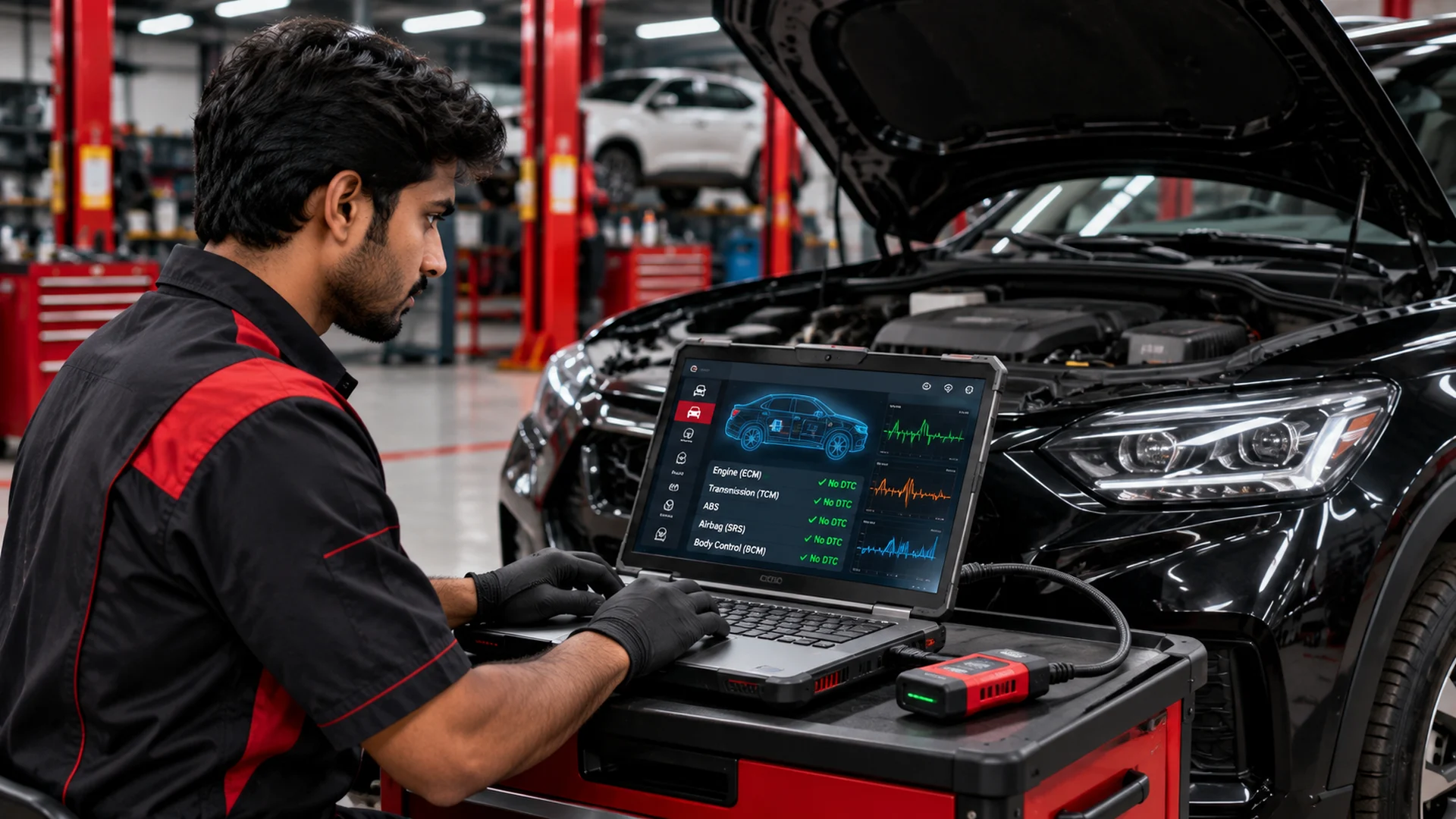
Computerised car diagnostics use a scanner connected to the car's diagnostic port to read fault codes and live data from its electronic control modules. The codes show which system detected a problem, and the live data shows how sensors and components are behaving. A good technician treats the scan as the start of the diagnosis, then tests the suspected components before recommending any parts.
Why Modern Cars Need Computer Diagnostics
Today's cars are managed by several control modules: one for the engine, often others for the transmission, ABS, airbags, body electronics and more. These modules constantly monitor dozens of sensors. When a reading falls outside its expected range, the module stores a diagnostic trouble code and, for some faults, turns on a warning light.
Without a scanner, many of these faults would take hours of guesswork to locate. With one, the technician can see in minutes which system reported the problem.
What an OBD Scanner Reads
Most modern cars have an on-board diagnostics (OBD) port, usually under the dashboard near the steering column. A scanner connected there can show:
- Stored codes: faults the module has confirmed.
- Pending codes: faults detected once but not yet confirmed.
- Freeze frame data: sensor readings captured at the moment the fault was recorded, such as engine speed and temperature.
- Live data: real-time readings from sensors while the engine runs.
- Readiness monitors: whether the car's self-tests have completed.
Advanced scanners can also run component tests, such as switching a cooling fan or injector on and off.
A Code Is a Clue, Not a Verdict
This is the most important point for car owners. A code such as an oxygen sensor fault does not necessarily mean the oxygen sensor is faulty. It means the engine computer saw a signal it did not expect from that circuit. The cause could be the sensor, a wiring fault, an exhaust leak, or an engine running too rich or too lean for another reason.
A careful diagnosis continues with:
- Reading the code and freeze frame data.
- Checking for known issues with that model.
- Viewing live data to see how the system behaves.
- Testing the wiring, connectors and component with a multimeter or other tools.
- Confirming the repair by clearing the code and verifying it does not return.
Replacing parts based only on a code can be expensive and may not fix the fault.
When to Get a Diagnostic Scan
- The check engine light is on or flashing. Our guide on why the check engine light comes on explains the difference.
- The car feels down on power, hesitates or idles roughly.
- Fuel economy has dropped noticeably.
- An ABS, airbag or other warning light is on.
- Before buying a used car, to look for stored or recently cleared codes.
- As part of a regular service, to catch pending faults early.
A scanner check is included in our periodic car service.
What Diagnostics Cannot Do
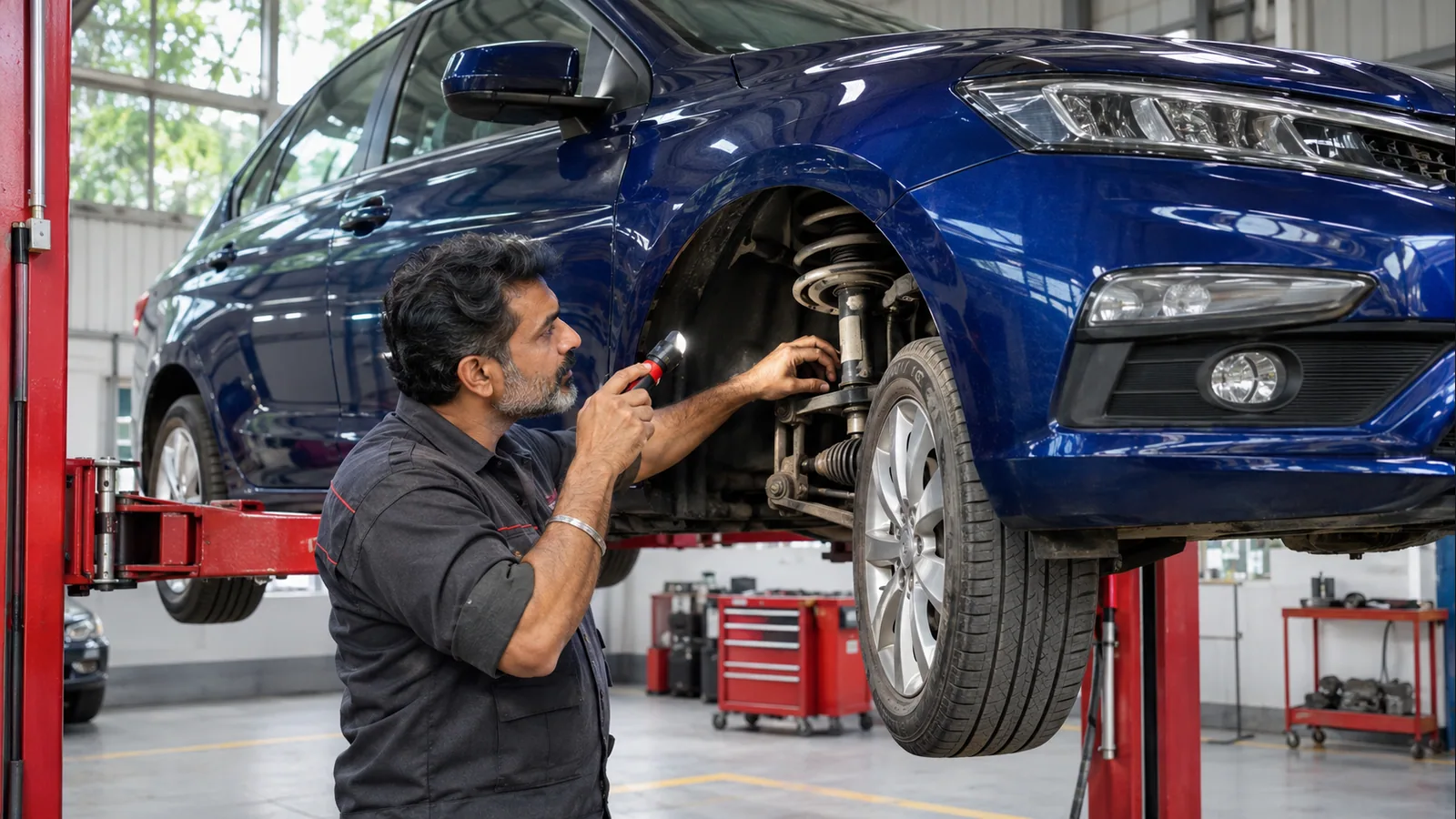
Diagnostics only see what sensors report. Mechanical issues such as worn suspension bushes, a slipping clutch or most brake wear do not usually set codes. A complete inspection still needs a technician's eyes, ears and a road test. Likewise, intermittent faults may not be present when the car is in the workshop, so describing exactly when the symptom occurs helps a great deal.
How to Describe a Problem When You Book
Useful details include:
- when the symptom started,
- whether it happens hot or cold, at idle or under load,
- whether a warning light came on and whether it was steady or flashing,
- any recent work, refuelling or battery changes.
Low battery voltage can trigger misleading codes, which is why a battery check is often part of the diagnosis. See car battery problems and warning signs for more.
Multi-Brand Diagnostics
Different manufacturers use different module layouts and code definitions beyond the standard set. A multi-brand workshop uses scanners that cover a wide range of makes, combined with model-specific technical information. For most everyday faults on Maruti, Hyundai, Tata, Honda, Toyota, Kia, Mahindra and similar cars, this is sufficient. Some manufacturer-specific programming tasks may still need dealer equipment, and an honest workshop will tell you when that is the case.
Home Scanners and Phone Apps
Inexpensive scanners and phone apps can read basic codes, which is useful for curiosity. They rarely show manufacturer-specific codes or run tests, and a code without context can lead to the wrong conclusion. Use them as a starting point, not a substitute for proper testing.
Conclusion
Computerised diagnostics make modern car repair faster and more accurate, but the scanner does not replace testing. A fault code tells the technician where to look; the diagnosis finds what is actually wrong.
If a warning light is on or your car is behaving oddly, call ROADSTERGURU on 9990700500 or message us on WhatsApp. We run scanner diagnostics at our Patwari workshop in Greater Noida West, close to Gaur City, and explain the findings before recommending any repair.
Frequently Asked Questions
It reads stored and pending fault codes from the car's control modules, and can show live sensor data such as temperatures, voltages and fuel trims.
No. A code points to a system or circuit that reported a problem. The technician still has to test to find the actual cause.
No. Clearing codes only erases the record. If the fault is still there, the code and warning light return.
It can be. Pending codes and live data can reveal developing problems before a warning light appears.
Most modern petrol and diesel cars have a standard diagnostic port, though the depth of information available varies by make and scanner.