Common Car Suspension Problems on City Roads
The common car suspension problems caused by potholes and speed breakers, the symptoms of worn shock absorbers, bushes and links, and how they are diagnosed.
The most common car suspension problems on city roads are worn stabiliser links, tired shock absorbers, cracked bushes, worn ball joints and damaged mounts, usually caused by repeated impacts from potholes and speed breakers. Typical symptoms are knocking over bumps, excessive bouncing, a car that wanders or leans, and uneven tyre wear. Most of these faults are straightforward to diagnose on a lift and fix before they affect safety.
What the Suspension Does
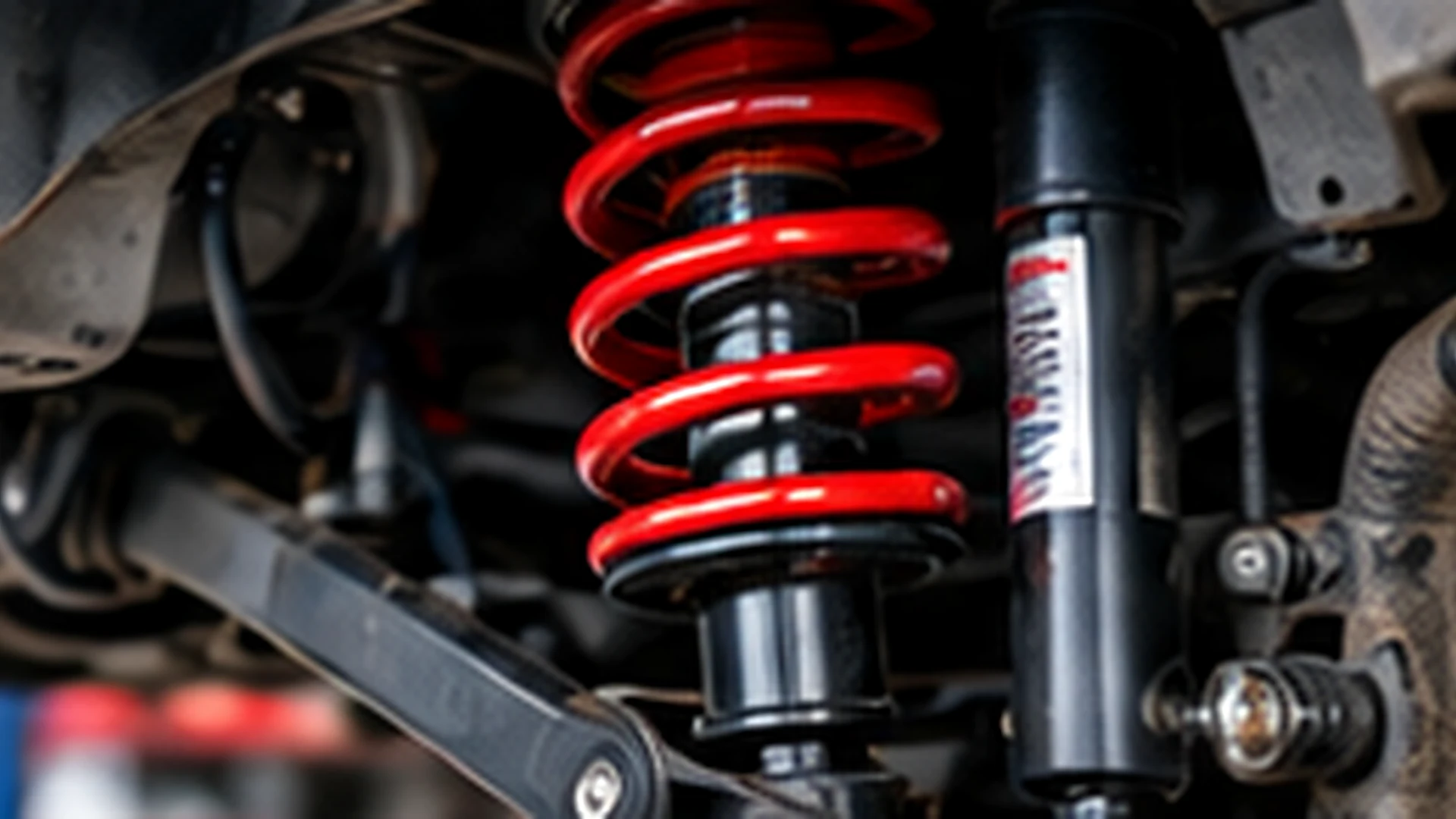
The suspension connects the wheels to the body. Springs carry the car's weight and absorb bumps; shock absorbers (dampers) control how quickly the springs compress and rebound; arms, bushes, ball joints and links hold the wheels in the correct position. Together they keep the tyres in contact with the road, which affects braking, steering and comfort.
Why City Roads Are Hard on Suspension
A typical drive across Greater Noida West includes speed breakers of different heights, patched surfaces, potholes after rain and the occasional open drain cover. On Shahberi Road and other stretches with ongoing work, surfaces change frequently. Each sharp impact loads the bushes, links and mounts. Over months, rubber bushes crack, links develop play and shock absorbers lose their damping.
Common Problems and Their Symptoms
Stabiliser (Anti-Roll Bar) Links
These small links connect the anti-roll bar to the suspension. When their joints wear, they produce a light knocking or rattling over uneven roads, often more noticeable at low speeds. They are among the most frequent suspension repairs in city cars.
Shock Absorbers
Worn shocks let the car bounce more than once after a bump, dip at the nose under braking and roll more in corners. You may see oily residue on the shock body. Worn dampers also reduce tyre grip, which lengthens stopping distances on rough surfaces.
Suspension Bushes
Rubber bushes isolate metal parts from each other. Cracked or perished bushes cause clunks when accelerating or braking, vague steering and uneven tyre wear.
Ball Joints and Tie-Rod Ends
These allow the wheels to steer and move up and down. Wear produces knocking, steering play and wandering on straight roads. Badly worn joints are a safety concern.
Strut Mounts and Bearings
At the top of the front struts, mounts can wear and cause clunking or creaking when turning the steering at low speed, for example while parking.
Springs
Coil springs can sag or, occasionally, break. A car sitting lower on one corner or a sudden harsh clunk can indicate a spring problem.
How Suspension Faults Are Diagnosed
A methodical inspection includes:
- A road test over uneven surfaces to reproduce the noise or behaviour.
- A bounce test at each corner to check damping.
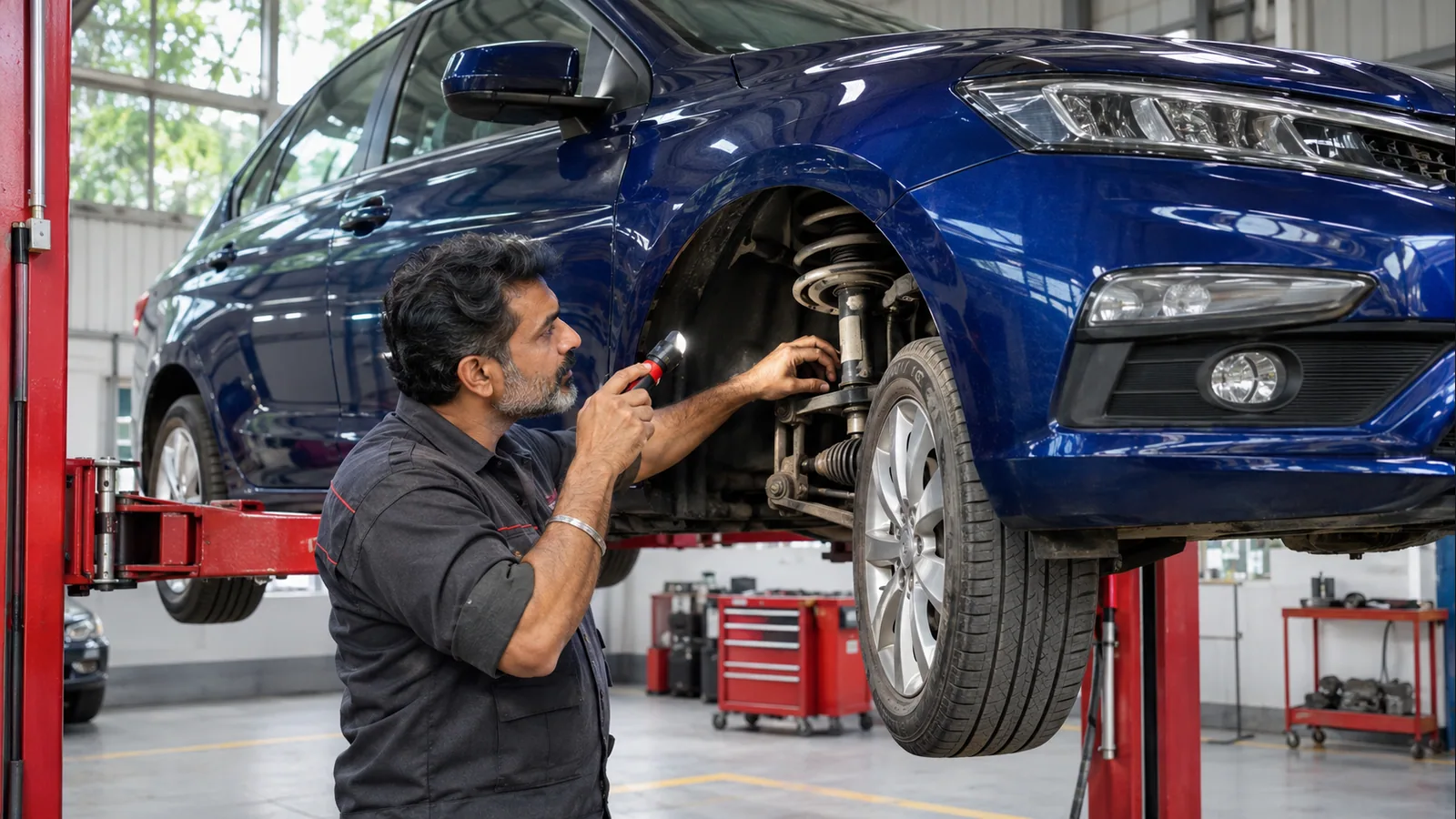
- Lifting the car and checking each joint for play with a pry bar.
- Inspecting bushes for cracks and shocks for leaks.
- Checking tyres for wear patterns that point to specific faults.
This inspection is part of a good periodic car service, so many suspension problems are caught early.
Suspension, Alignment and Tyres Are Linked
Worn suspension parts let the wheel angles change as you drive, which causes uneven tyre wear and pulling. After replacing steering or suspension components, the alignment should be checked. Our article on why regular wheel alignment matters explains this further, and our wheel alignment and balancing service handles the follow-up.
Vibration Is a Related but Different Symptom
If the steering wheel shakes at certain speeds, the cause is more likely wheel balancing, tyre damage or brake discs than the suspension. Our guide to steering vibration causes covers how to tell them apart.
What Repairs Usually Involve
Most suspension repairs replace a single worn part rather than the whole system. A stabiliser link or bush is a relatively quick job. Shock absorbers are replaced in axle pairs so both sides behave the same, and new top mounts are often fitted at the same time if the old ones are worn. Ball joints may be replaced on their own or with the lower arm, depending on the car's design. After the repair, a road test over the same uneven surface confirms that the noise or behaviour has gone, and an alignment check follows if steering or suspension geometry was disturbed. A transparent workshop shows you the worn part and explains why it was replaced.
How to Reduce Suspension Wear
- Slow right down for speed breakers and cross them straight on.
- Avoid potholes where safe to do so, and slow down when you cannot.
- Do not overload the car beyond its rated capacity.
- Keep tyre pressures correct; underinflated tyres transmit more impact.
- Mention new noises early, before a small worn part damages others.
Conclusion
Knocking over bumps, a bouncy ride, wandering steering and uneven tyre wear are all signs of suspension wear. On city roads these problems are common and usually inexpensive to fix early, but they become safety issues if ignored.
If your car has started knocking or feels unsettled, call ROADSTERGURU on 9990700500 or message us on WhatsApp. We inspect suspension at our Patwari workshop in Greater Noida West and explain what needs replacing before starting work.
Frequently Asked Questions
Common causes include worn stabiliser bar links, suspension bushes, ball joints or shock absorber mounts. An inspection on a lift usually identifies the source.
Signs include excessive bouncing after bumps, nose-diving under braking, body roll in corners, fluid leaking from the shock and uneven, cupped tyre wear.
Minor noises may not be immediately dangerous, but worn suspension affects braking, stability and steering. Have it inspected promptly, especially if the car feels unstable.
Shock absorbers and springs are normally replaced in axle pairs to keep handling balanced. Links and bushes can be replaced individually if only one is worn.
Often, yes. Replacing steering or suspension parts can change the wheel angles, so an alignment check afterwards is recommended.