Car Maintenance Checklist Before a Long Road Trip
A practical pre-road-trip car checklist covering tyres, brakes, fluids, battery, lights, AC and documents, so your car is ready for highway driving.

Before a long road trip, check your tyres (including the spare), brakes, engine oil and coolant, battery, lights, wipers, AC and documents, ideally a week before you leave. Highway driving puts sustained load on the engine, cooling system, tyres and brakes, so small issues that go unnoticed in city traffic can become problems hundreds of kilometres from home. Use this car maintenance checklist before a long road trip to plan your preparation.
Use this checklist yourself, or ask a workshop to run through it with a pre-trip inspection.
1. Tyres and Wheels
- Pressure: set to the recommended value when cold, including the spare. Use the full-load figure if the car will be packed.
- Tread depth: check across the full width. Worn tyres lose grip quickly in rain.
- Damage: look for cuts, bulges or embedded objects on the sidewalls and tread.
- Uneven wear: wear on one edge suggests alignment problems; see why regular wheel alignment matters.
- Vibration: a shake at highway speeds usually means a balancing issue. Our wheel alignment and balancing service handles both.
2. Brakes
Highway driving often ends with heavy braking on ghat roads or in traffic near destinations. Have the pads, discs and brake fluid checked. Any squealing, grinding or vibration under braking should be inspected before you leave. Our guide on when to replace brake pads explains the warning signs.
3. Engine Oil and Filters
Check the oil level on the dipstick. If an oil change is due within the next few thousand kilometres, consider doing it before the trip. A clean air filter helps the engine breathe, particularly on dusty roads.
4. Cooling System
Overheating is one of the most common highway breakdowns. Check:
- coolant level in the expansion tank, with the engine cold,
- hoses for cracks, swelling or leaks,
- that the radiator fan switches on when the engine is hot.
Never open the radiator cap on a hot engine.
5. Battery and Charging
Have the battery and charging system tested. A weak battery may start the car at home but fail after the car has been switched off at a rest stop. Clean and tighten the terminals.
6. Lights, Horn and Wipers
Check headlights on low and high beam, indicators, brake lights, reverse lights and hazard lights. Replace worn wiper blades and fill the washer reservoir. Night driving on highways depends heavily on good lights and a clear windscreen.
7. Belts and Leaks
Look for cracks or fraying on visible drive belts. Check the ground under your parking spot for fresh drips of oil, coolant or other fluids.
8. AC and Cabin
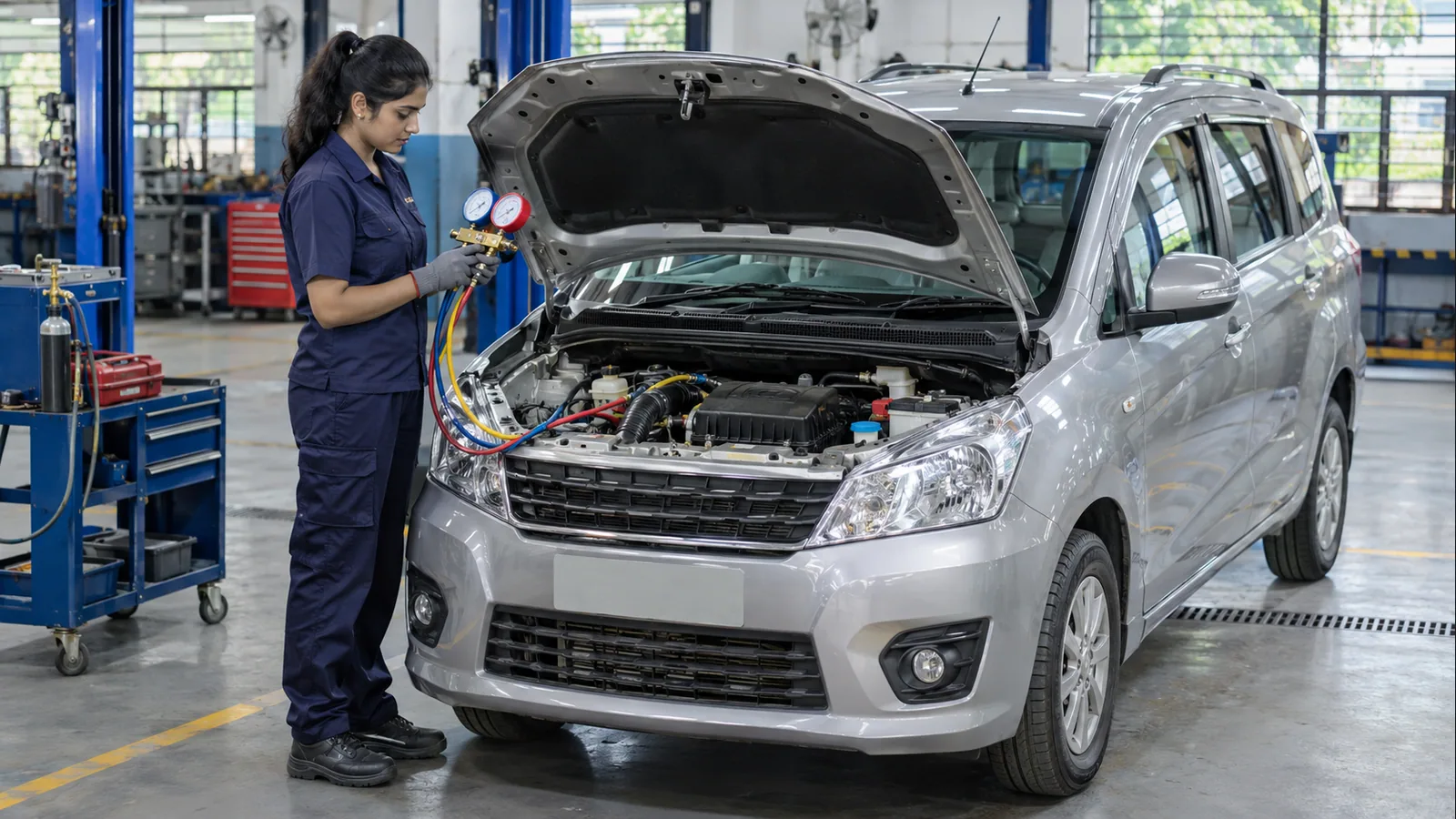
A long drive with weak AC is exhausting, especially in summer. If cooling has dropped, get it diagnosed before the trip rather than refilled at a roadside stop. Our car AC repair service starts with a proper check. Replace the cabin filter if it is due.
9. Steering and Suspension
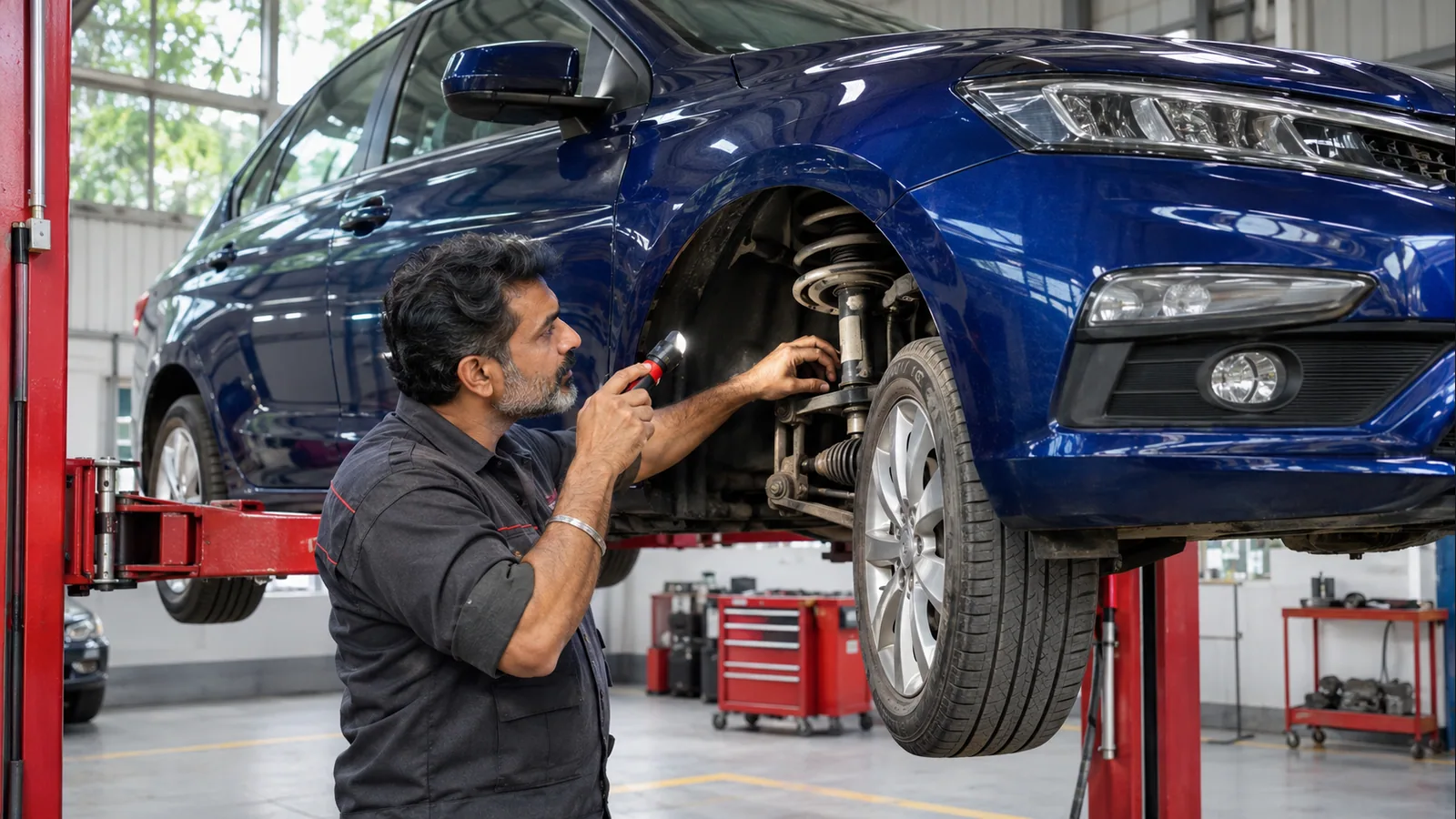
Listen for knocks over bumps and feel for wandering on straight roads. Worn suspension parts become tiring and less safe at highway speeds.
10. Emergency Kit and Documents
- Spare wheel, jack and wheel spanner, and the locking wheel nut key if fitted.
- Warning triangle, torch and first-aid kit.
- Registration certificate, valid insurance, pollution certificate and driving licence, physical or digital as accepted.
- Roadside assistance number, if your insurance or manufacturer provides one.
- Water, a phone charger and a power bank.
Should You Get a Full Service?
If a periodic car service is due within a month or so, bringing it forward saves you from worrying about it on the road. If the car was serviced recently, a focused pre-trip inspection covering the items above is usually enough.
On the Trip
- Check tyre pressures again after the first fuel stop.
- Watch the temperature gauge on long climbs.
- Take breaks every couple of hours; it helps you and lets you spot leaks or warning lights.
- Do not ignore new noises or warning lights; stop safely and check.
Packing and Loading
How you load the car matters too. Put the heaviest luggage low in the boot and close to the rear seats, and do not exceed the vehicle's load limit, which you will find in the manual. Heavy loads change braking and handling, and they increase the pressure the tyres need. Avoid blocking the rear view with stacked bags, and secure loose items in the cabin, since anything unsecured can become dangerous under hard braking. Roof carriers add wind resistance and noise, so expect slightly higher fuel consumption on the highway.
Planning Breaks and Fuel
On long highway stretches, plan fuel stops before the tank runs low rather than relying on finding a pump at the last moment. Use breaks to walk around the car: check for new leaks, look at the tyres and feel the wheels for unusual heat, which can indicate a dragging brake.
Conclusion
A pre-trip check takes little time compared with the cost and stress of a highway breakdown. Focus on tyres, brakes, fluids, battery, lights and AC, and leave enough time before departure to fix anything that turns up.
Planning a drive out of Greater Noida West or Crossing Republik? Call ROADSTERGURU on 9990700500 or WhatsApp us to book a pre-trip inspection at our Patwari workshop.
Frequently Asked Questions
Ideally a week or so before you leave. That gives time to order parts or fix anything the inspection finds without rushing.
If a service is due soon, it makes sense to bring it forward. If the car was serviced recently, a focused pre-trip inspection is usually enough.
Use the pressures on the label in the door jamb or in the manual. Some cars list higher pressures for full load, which is relevant if you are carrying luggage and passengers.
A properly inflated spare, jack and wheel spanner, a warning triangle, a torch, a basic first-aid kit, water and a phone charger.
If the car pulls, the steering is off-centre or tyres are wearing unevenly, yes. Highway speeds make these problems more noticeable and tiring.