Car Denting and Painting: What Vehicle Owners Should Know
How car denting and painting works, from damage assessment and dent repair to colour matching, booth painting and aftercare, explained for car owners.
Car denting and painting is the process of repairing body damage and restoring the finish so the panel looks and protects like the original. It usually involves assessing the damage, repairing or replacing the panel, preparing the surface, matching the colour and applying paint and clear coat in a controlled environment. Knowing how each step works helps you judge estimates and ask the right questions.
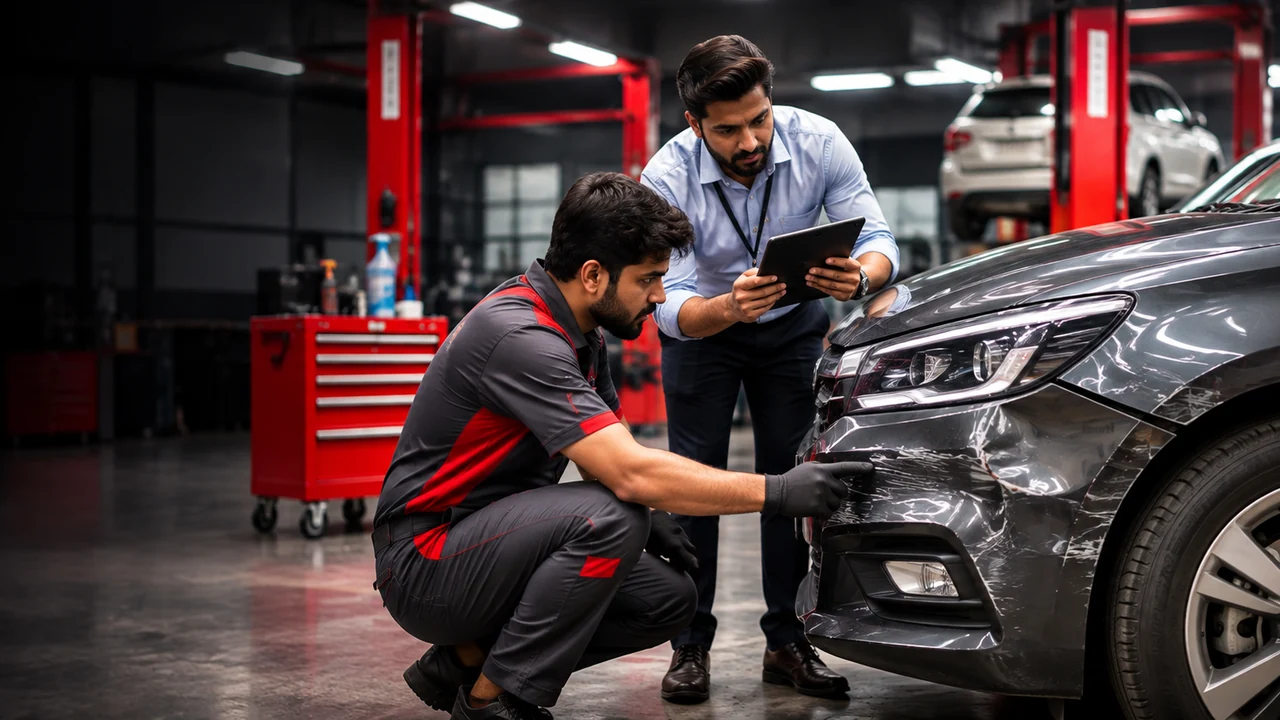
Assessing the Damage First
Every job starts with an honest assessment in good light. The technician looks at:
- how deep the dent is and whether the metal is stretched or creased,
- whether the paint is cracked, chipped or scraped through to metal,
- whether plastic parts such as bumpers are cracked or only scuffed,
- whether brackets, sensors, lights or clips behind the panel are damaged.
That last point is easy to miss. A bumper that looks only scuffed can hide broken mounting brackets or a misaligned parking sensor. If the damage came from an accident and you have comprehensive cover, it may be worth reading how a car insurance claim repair works before deciding.
Repair or Replace?
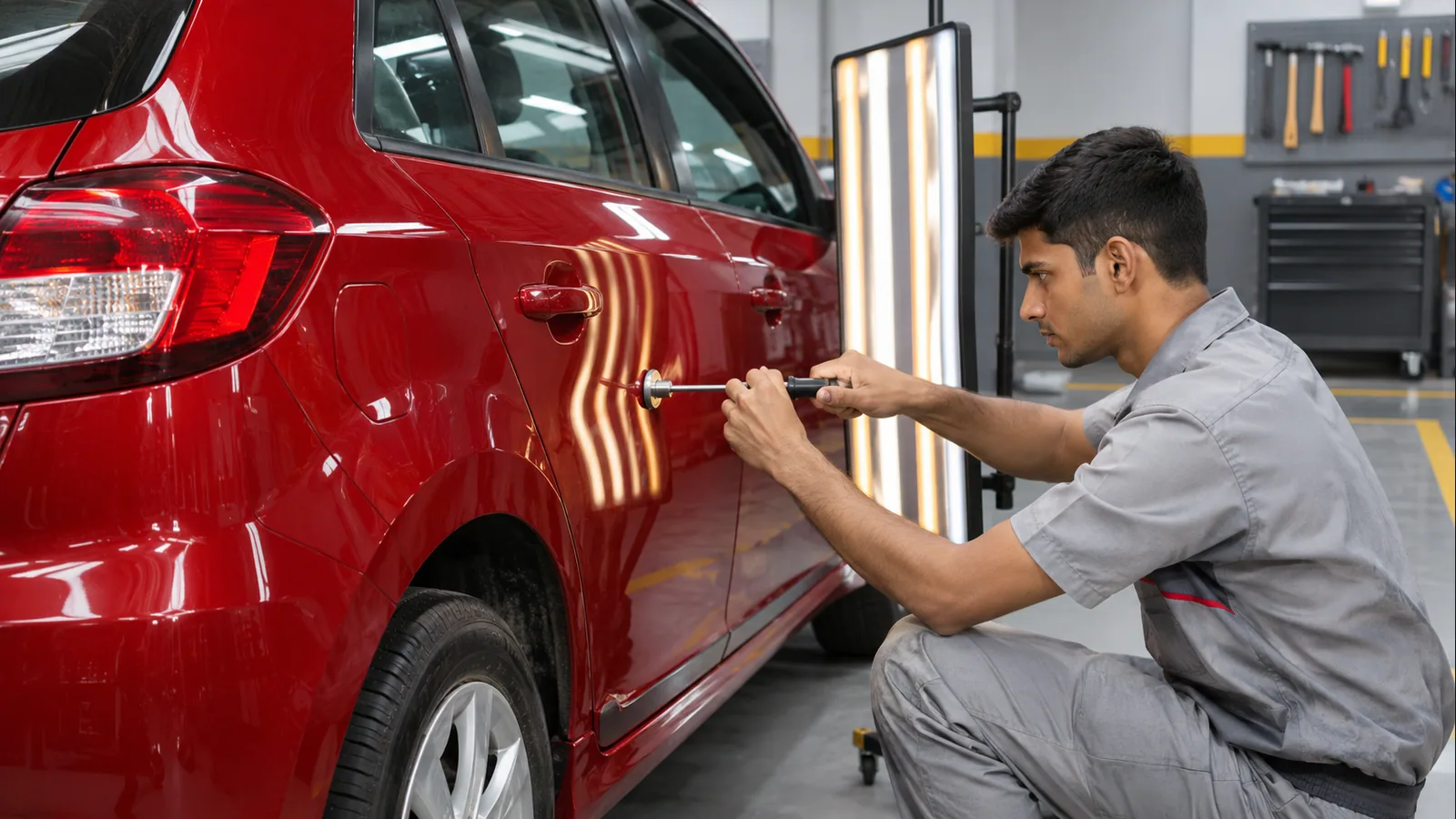
Many dents can be repaired. Technicians use dent pullers, hammers and dollies to reshape the metal, then a thin layer of body filler to restore a smooth contour where needed. Replacement makes sense when a panel is torn, badly stretched or creased along a structural edge, or when repair would require so much filler that durability suffers. A transparent workshop explains which route it recommends and why.
Plastic bumpers can often be repaired too, including small cracks, using plastic welding or specialised fillers. Large cracks near mounting points usually mean replacement.
Surface Preparation
Paint is only as good as the surface beneath it. Preparation includes sanding the area, applying primer, sanding again and cleaning to remove dust and oils. Rushed preparation shows up later as visible repair edges, shrinkage marks or peeling.
Colour Matching
Every car has a paint code, usually on a label in the door jamb or engine bay. The code is the starting point, but paint colour also changes with age and sunlight exposure. A careful painter mixes the colour, sprays a test card, compares it with the car and adjusts if necessary. For metallic and pearl finishes, blending the new colour into adjoining panels helps the repair disappear in daylight.
Why Booth Painting Matters
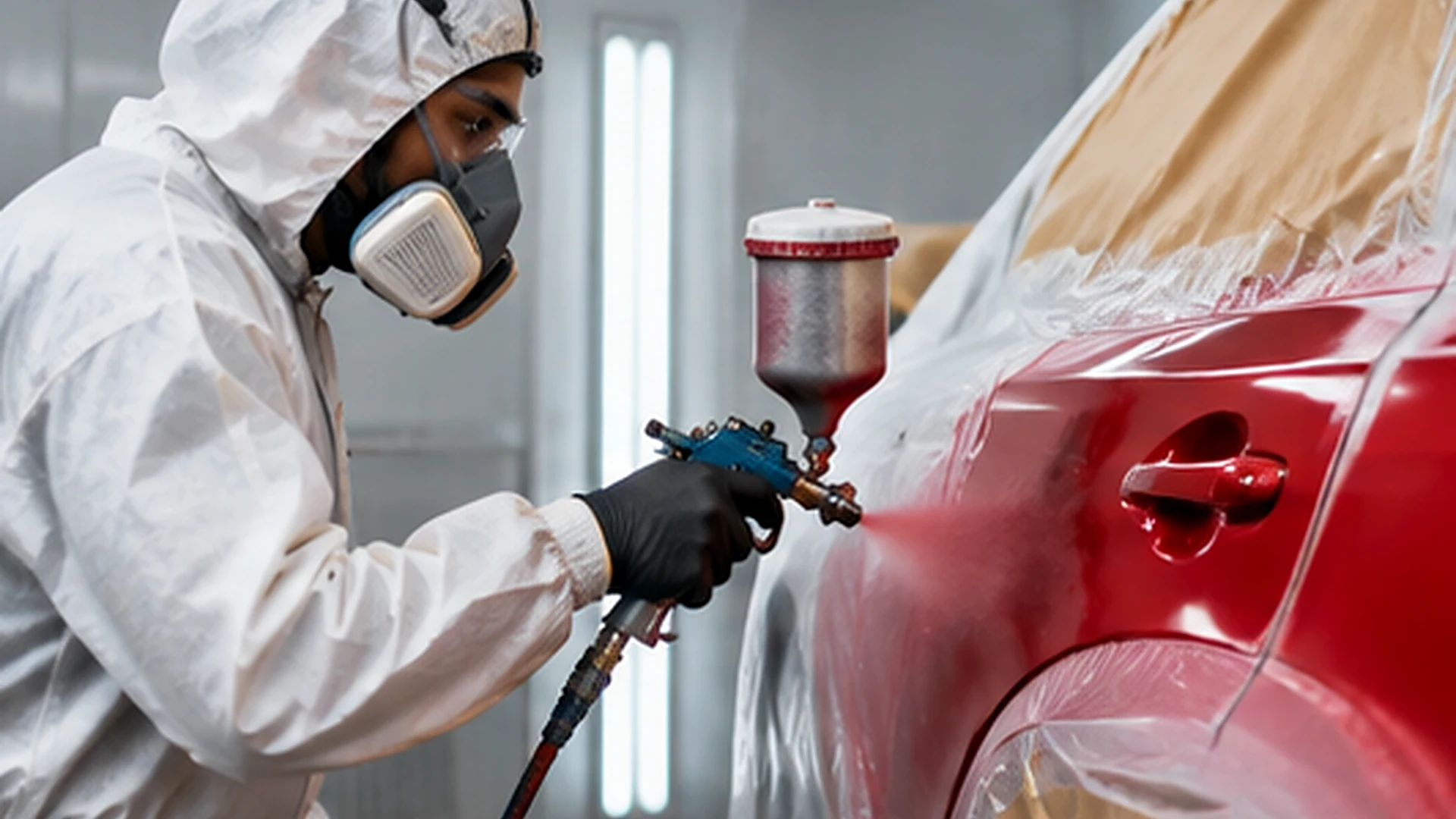
Painting in an enclosed paint booth keeps dust and insects off the wet paint and controls the curing conditions. The base colour is applied in thin coats, followed by clear coat for gloss and protection. The finish is then inspected and, if required, lightly polished. You can read more about our process on the denting and painting service page.
Scratches: When They Matter
Not every scratch needs a respray. Light scratches in the clear coat can often be polished out. Scratches that reach the colour coat need touch-up or local repair. Scratches through to bare metal should be repaired soon, because exposed steel can rust, and rust spreads under the surrounding paint.
Common Situations Around Greater Noida West
Tight society parking, narrow lanes in older villages, and busy roads such as Shahberi Road and around the major chowks make low-speed scrapes and door dings common. Most of these are bumper scuffs, door edge chips and shallow dents that respond well to repair rather than replacement. Our car maintenance tips for Shahberi and Noida Extension residents include a few practical ways to reduce parking damage.
Questions to Ask Before Approving the Work
- Will the panel be repaired or replaced, and why?
- Will any adjoining panels be blended to match the colour?
- Is there hidden damage behind the panel?
- How long does the paint need to cure before I can wash or polish it?
- Will the parts and labour be listed separately on the bill?
How Long Does It Take?
Timing depends on the extent of the damage and on paint curing. A single scuffed bumper or a shallow door dent is often a short job, while multiple panels, replacement parts or insurance approvals add time. Rushing curing between coats is one of the main causes of poor finishes, so a realistic timeline is a sign of good practice rather than slowness. Ask for an estimated delivery time when you approve the work, and expect an update if hidden damage changes the plan.
Aftercare for Fresh Paint
For the first few weeks, wash the car gently by hand, avoid pressure washers close to the repaired area and do not apply wax or machine polish until the paint has cured, following the workshop's guidance. Park in shade where possible during the curing period.
Conclusion
Good denting and painting depends on an honest assessment, careful preparation, accurate colour matching and booth painting. Ask how each step will be handled and you will get a repair that lasts.
For a quick opinion, send photos of the damage to ROADSTERGURU on WhatsApp at 9990700500. We repair dents and refinish panels at our Patwari workshop in Greater Noida West and explain the options before starting.
Frequently Asked Questions
Many can. Shallow dents and moderate creases are often pulled and reshaped. Panels that are torn, heavily stretched or badly creased near edges may be better replaced.
A good workshop matches the colour using the paint code and checks it against the car, often blending into neighbouring panels so the difference is not visible in daylight.
Follow the workshop's advice. Fresh paint needs time to cure fully, so gentle hand washing is usually recommended at first, and pressure washers and polishing are avoided for a while.
Yes, especially if they reach bare metal. Exposed metal can start to rust, and rust spreads under the paint.
Accident damage can often be repaired through your insurance claim, subject to your policy terms and the insurer's approval.